Memory Is Not Optional

Something happens when a people lose access to their own story. It does not happen all at once. It begins quietly.
A photograph with no caption. A name no one remembers how to pronounce. A song that the grandchildren cannot translate. Small losses that seem, individually, survivable.
They are not.

Memory is not sentiment. It is structure. It is the material from which identity is built, the way stone is the material from which a city is built. Remove enough of it and what remains is not a different version of the same thing. It is something else entirely.
This is often treated as a minority concern. Communities displaced, cultures suppressed, histories erased by the powerful. And yes, that is real and it is urgent. But the loss does not stay contained. When a language disappears, everyone loses a way of thinking. When an oral tradition dies without being recorded, we lose not just the stories but the logic inside them, the understanding of a place and its people that cannot be reconstructed from the outside. The archive of human experience becomes thinner. We all inherit that poverty.
History is not made of nations. It is made of people. Women who fed families through crisis and were never named in any record. Craftsmen who carried knowledge in their hands that never made it into a book. Farmers who understood how to read a landscape in ways that no university preserved. Every one of those losses narrows what we know about what it means to live, to endure, to build something worth passing on.
Syria is not a single story. It is thousands of years of layered presence, Aramaic spoken before Arabic, early Christianity alongside traditions that predate it, Druze, Alawite, Kurdish, Syriac, Yazidi, and Jewish communities, each holding distinct memory, distinct ways of understanding the same landscape. None of them is the whole story. All of them are part of it. Remove any one, and what remains begins to misrepresent the thing it was always meant to hold.
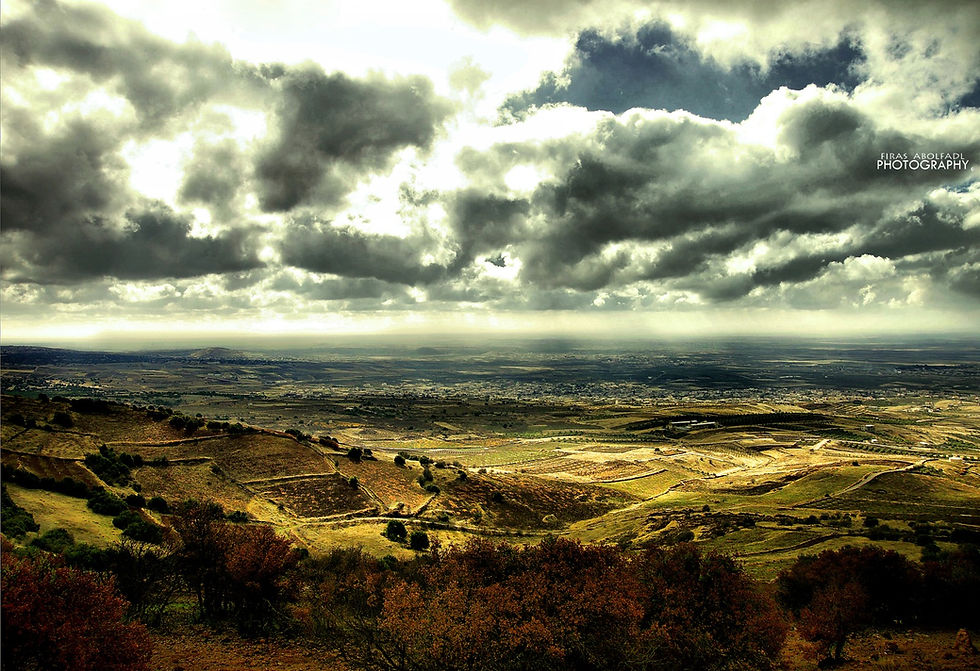
We begin in Swaida. A city in southern Syria where a Druze majority, a Christian minority, a handful of Muslim families, and Bedouin communities have shared the same black basalt landscape for centuries. Not in the frictionless way that gets romanticised, but in the real way with distinct traditions, distinct memory, and a long practice of existing alongside one another without erasing what makes each different. That coexistence is itself a kind of archive. And it is where the Living Memory project begins its work because it is a place where the layered truth of identity is still legible, still held in living people, still possible to record before it is lost.

To preserve that memory is not nostalgia. Nostalgia is the desire to return. This is something different. This is the insistence that the full picture exists, that it is worth knowing, that it belongs to the people who lived it and to anyone willing to pay attention.
When memory is whole, a culture can speak for itself. It does not need to be defined by those who were not there. It does not need to be simplified into whatever version is most useful to whoever is telling the story this decade. It stands on what it actually was.


Comments